

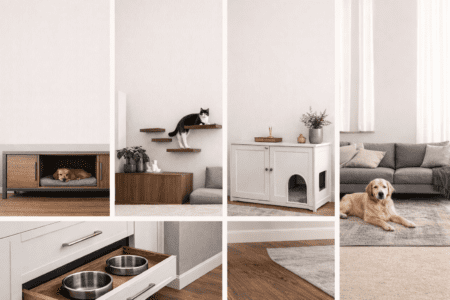
The Modern Homeowner’s Pet Problem
You love your clean lines, your neutral palette, and your minimalist aesthetic. You also adore your dog or cat, who is a non-negotiable part of the family. The dilemma? The bulky plastic crate, the primary-colored chew toys, and the perpetually-spilled water dish simply do not belong in your vision of modern home decor.
For too long, pet-friendly decor meant sacrificing style for utility, resulting in pet spaces that felt like necessary eyesores.
We’re moving beyond the crate. This guide shows you how to transform pet necessities—from beds and feeding stations to litter boxes and toy storage—into intentional, stylish pet furniture that complements your contemporary interior design. Get ready to start integrating pet spaces seamlessly into the life of your home.
II. The Seamless Sleep Zone (Replacing the Ugly Crate)
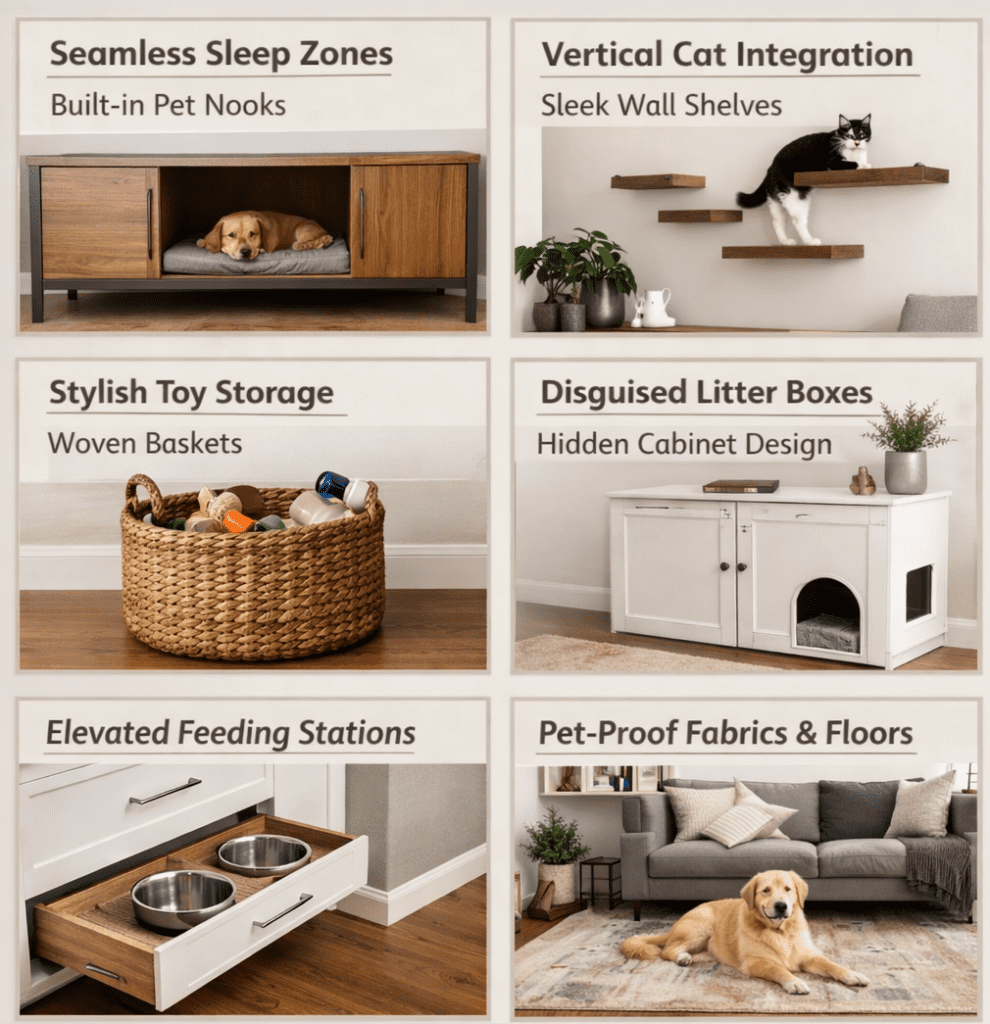
The first step in achieving true pet-friendly decor harmony is redesigning where your pet sleeps. Forget the wire cage; think custom furniture.
The Furniture Hack: Transforming Standard Pieces
The secret to a visually calm home is dual-purpose furniture. Your pet’s crate should be no exception.
End Table Conversions:
Look for solid wood end tables or console tables with enclosed sides. Remove the lower panel and simply insert a stylish pet cushion. This instantly turns an unsightly crate into a functional piece of furniture.
Built-in Dens:
For renovation projects, utilize dead space. A custom dog den built under a staircase, integrated into the end of a kitchen island, or placed beneath a utility counter offers a cozy retreat that completely disappears from view.
(Visual Recommendation: Image of a dog bed built into the side of a large media console.)
Recommendation:
When choosing a cushion, look for durable, chew-proof fabrics like tightly woven canvas or marine-grade vinyl that can be easily wiped clean.
Vertical Cat Integration: Shelves Over Towers
For cat owners, the bulky, carpet-covered cat tree is the antithesis of modern home decor.
Floating Wall Shelves:
Install deep, staggered floating shelves in the same wood or paint color as your trim. Cover them with thin, removable felt pads for traction. This creates an elegant, vertical pathway that your cat loves and that adds architectural interest to your wall.
Window Perches:
Install minimalist, cantilevered window perches using clear acrylic or sleek metal brackets. This provides prime viewing for your cat without blocking light or adding visual clutter.
III. Integrating Play & Storage Solutions
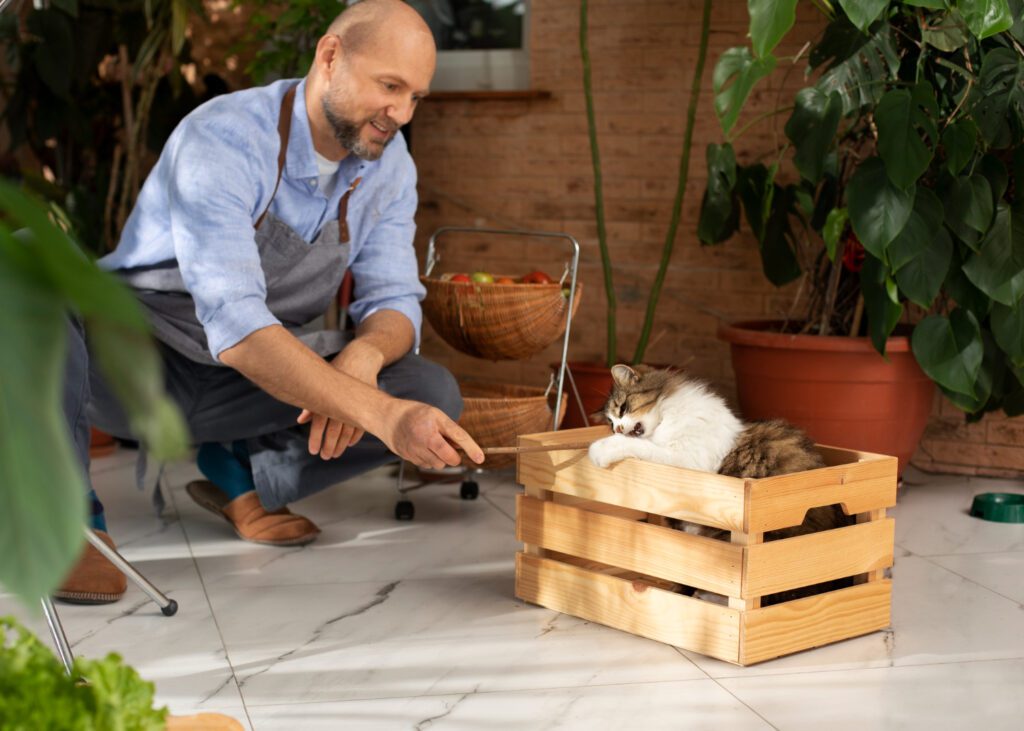
Clutter is the enemy of modern design. The key to managing pet toys and accessories is making the storage itself part of the decor.
A. Discreet Toy Management
Say goodbye to bright plastic bins and hello to intentional storage.
Woven Baskets:
Invest in high-quality, large woven baskets made of sisal, water hyacinth, or leather that match your home’s existing textures (e.g., blanket throws or area rugs). These look like decorative storage for throw blankets but serve as easy-access toy bins.
Storage Ottomans:
These are perfect for small spaces. They offer extra seating, a place to prop your feet, and a secret compartment for quickly stashing all the dog’s playthings before guests arrive. This is the definition of hideaway pet solutions.
Litter Box Disguises
The litter box is perhaps the most challenging item to conceal.
Modified Cabinetry:
Purchase a simple, inexpensive two-door cabinet or bench. Cut a small, neat entrance hole on the side panel. Place the litter box inside. The cabinet top can be used for books, lamps, or artwork, turning the function of the box into a chic piece of furniture.
Vented Enclosures:
Ensure any enclosed space has a large access point and ventilation holes cut high on the back panel to manage odor and airflow effectively.
IV. The Elevated Feeding Station
A messy, brightly colored feeding mat can quickly ruin the flow of an open-concept living space. Integrating pet spaces for mealtime requires smart, clean design.
Built-In Hidden Stations
If you’re renovating or customizing, this is the ultimate seamless solution.
Pull-Out Drawers:
In the kitchen or laundry room, dedicate the bottom drawer of a cabinet stack to feeding. The bowls are mounted inside, and the drawer pulls out for meals and slides back in afterward.
Wall Niches:
Create a shallow recess in a pantry or mudroom wall. Place bowls inside the niche at an elevated height. This is cleaner, better for digestion (especially for large dogs), and keeps the floor completely clear.
B. Stylish Materials for Bowls and Mats
Even the smallest details matter in modern home decor.
Bowl Aesthetics:
Ditch the plastic. Choose ceramic or heavy, matte metal bowls in colors that match your kitchen hardware or tile backsplash (think matte black, off-white, or sleek stainless steel).
Mats that Vanish:
Use durable, non-slip silicone mats in a neutral color (clear, gray, or sand) or a low-profile jute mat. These materials are easier to clean and less visually intrusive than brightly patterned rubber.
V. Durable Design: Choosing Pet-Proof Materials
The best way to integrate pets is to ensure your human furniture can withstand them. Choosing the right materials is the foundation of pet-friendly home decor.
A. Furniture Fabrics that Forgive
When selecting seating, focus on performance, not just looks.
Tightly Woven Performance Fabrics and Leather and Faux Leather:
These materials are fantastic for pets. They are easy to wipe clean, do not trap fur, and develop an attractive patina over time. Just avoid delicate silks or loose, chunky weaves that can snag. This ensures your investment is truly chew-proof.
B. Flooring and Rug Strategies
Hard Surfaces:
Opt for Luxury Vinyl Tile (LVT), polished concrete, or sealed hardwood. These are scratch-resistant and prevent pet odors from sinking in.
Washable Rugs:
Use area rugs from brands designed to be washed in a home machine. Layering a washable, low-pile rug over hard floors adds softness while remaining hyper-functional for inevitable pet messes.
Recommended Reading
Here’s a good link to a reputable design-site article about how to integrate pet furniture into a modern home — a great read if you want your pet’s space to look stylish, not “just pet stuff”:
IDW Italia — “Custom Furniture for Pets: How to Integrate Beds, Shelves and Play Areas While Maintaining Elegant and Functional Design”
Why this article is useful
• It explores how to integrate pet beds and furniture into existing furniture — e.g. under shelves or inside cabinets — so your home aesthetic stays clean.
• It emphasizes multifunctional furniture (like side-tables or storage units that double as pet spaces), which helps pets and interior design coexist.
• It gives ideas for elevated shelves or play-paths for cats — stylish, functional, and space-efficient.
VI. Conclusion: A Harmonious Modern Life
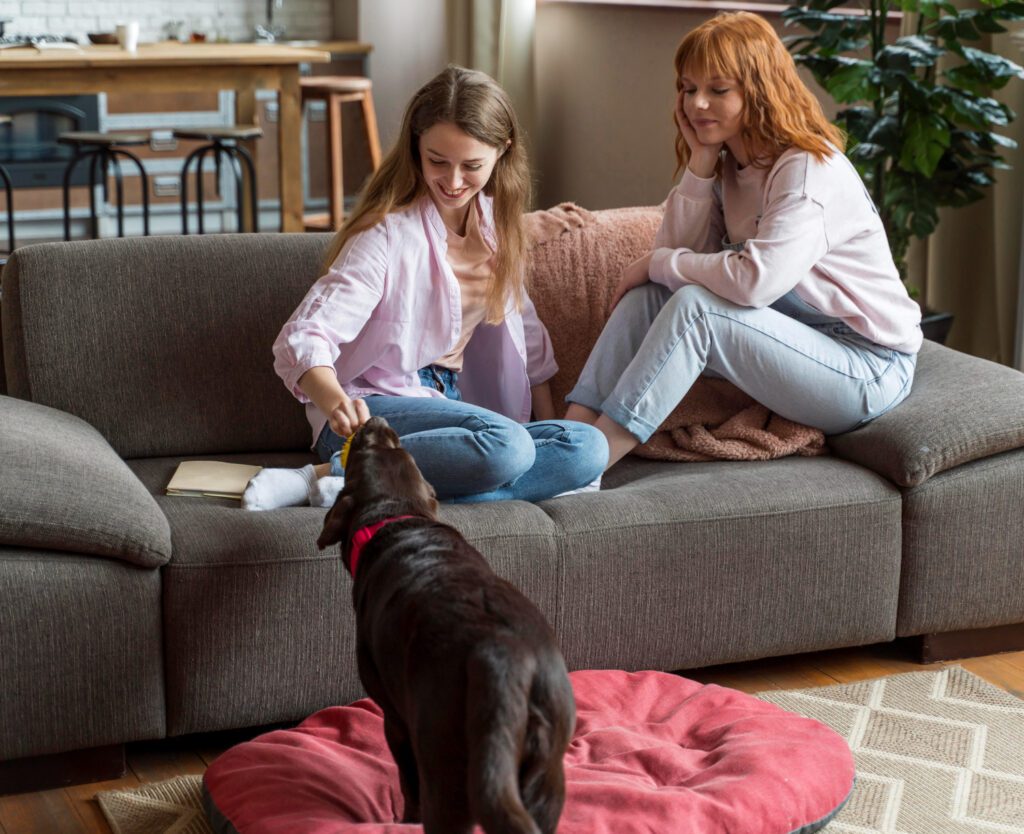
Integrating pet spaces seamlessly into your home isn’t about hiding your furry family members—it’s about honoring them with smart design. By using dual-purpose furniture, choosing durable and chew-proof fabrics, and embracing hideaway pet solutions, you create a truly harmonious home. A truly modern and beautiful space is one that functions perfectly for all its inhabitants, two-legged and four-legged alike.
Ready to upgrade your dog’s bedroom? Start small by replacing that plastic toy bin with a decorative woven basket this week!
Which of these pet-friendly decor ideas will you tackle first? Share your photos and tips in the comments below!