

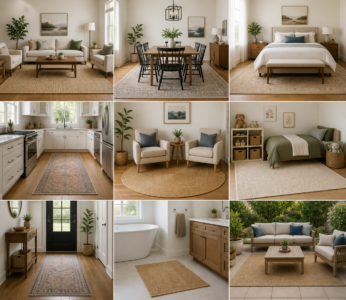
Sometimes, a room looks almost right…
The furniture is in place.
The colors work.
Everything is… fine.
And yet, something feels missing 🤍
More often than not—it’s not about adding something new.
It’s about placing what you already have… a little differently.
And rugs?
They quietly do more than we realise.
They anchor a space, soften it, and bring everything together.
But only when they’re placed right.
If you’ve ever felt like your rug looks a little “off” and you couldn’t quite figure out why—this guide is for you 💚
Living Room: Where Everything Comes Together
The living room is where rug placement matters the most… and where most of us get it slightly wrong.
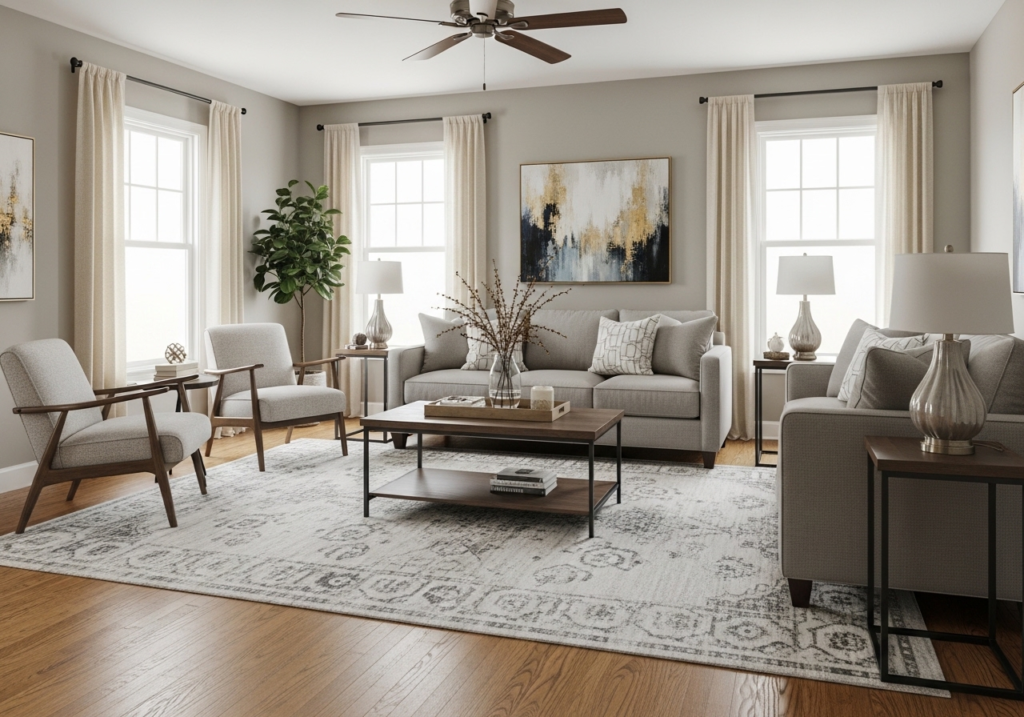
A very common mistake is choosing a rug that’s too small and placing it just under the coffee table. It might look okay at first glance, but it ends up making the entire space feel disconnected.
What actually works is letting the rug connect your furniture.
A simple shift—like placing the front legs of your sofa and chairs on the rug—can instantly make the space feel more grounded and intentional.
If your room allows it, you can even go bigger and place all furniture on the rug. But even the front-leg placement alone creates a beautiful sense of cohesion.
A good rule I always follow?
When in doubt, go slightly bigger.
It almost always looks better.
Bedroom: Softness You Can Feel
There’s something really comforting about stepping onto a soft rug first thing in the morning.
And that’s exactly how you should think about rug placement in a bedroom—not just visually, but experientially.
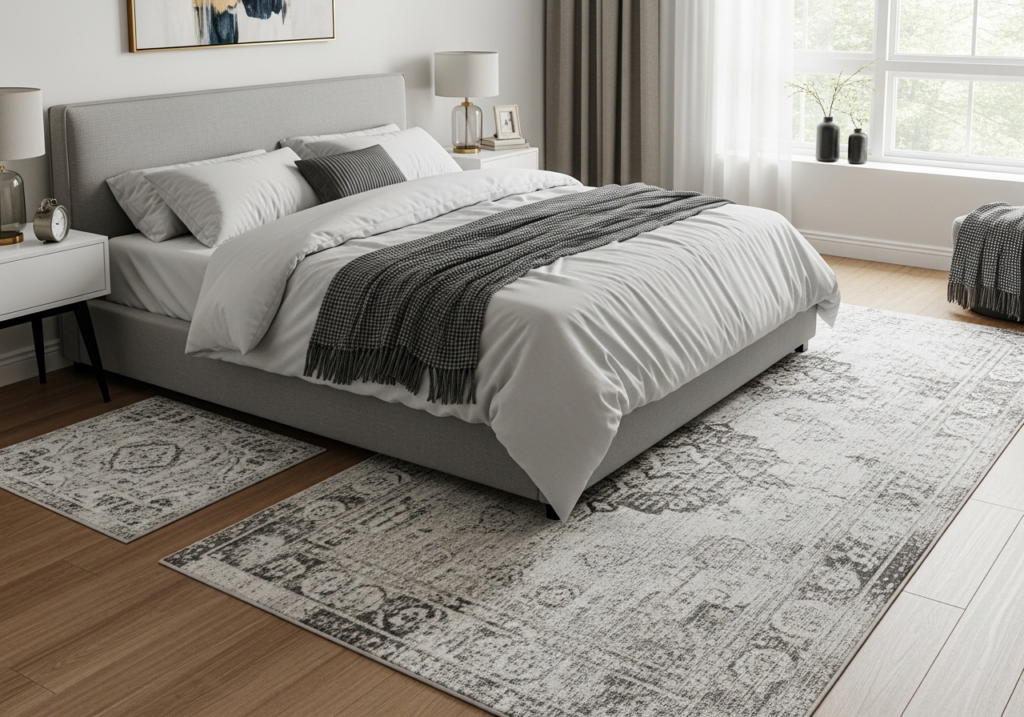
The most balanced way to place a rug here is to slide it under the bed so that it extends out on both sides and at the foot. This creates a soft frame around the bed and makes the entire room feel warmer and more complete.
If you’re working with a smaller space, even placing runners on either side of the bed works beautifully. It still gives you that cozy feeling without needing a large rug.
One thing that doesn’t quite work?
A tiny rug placed only at the foot of the bed.
It tends to feel like an afterthought rather than part of the space.
Bedroom: Softness You Can Feel
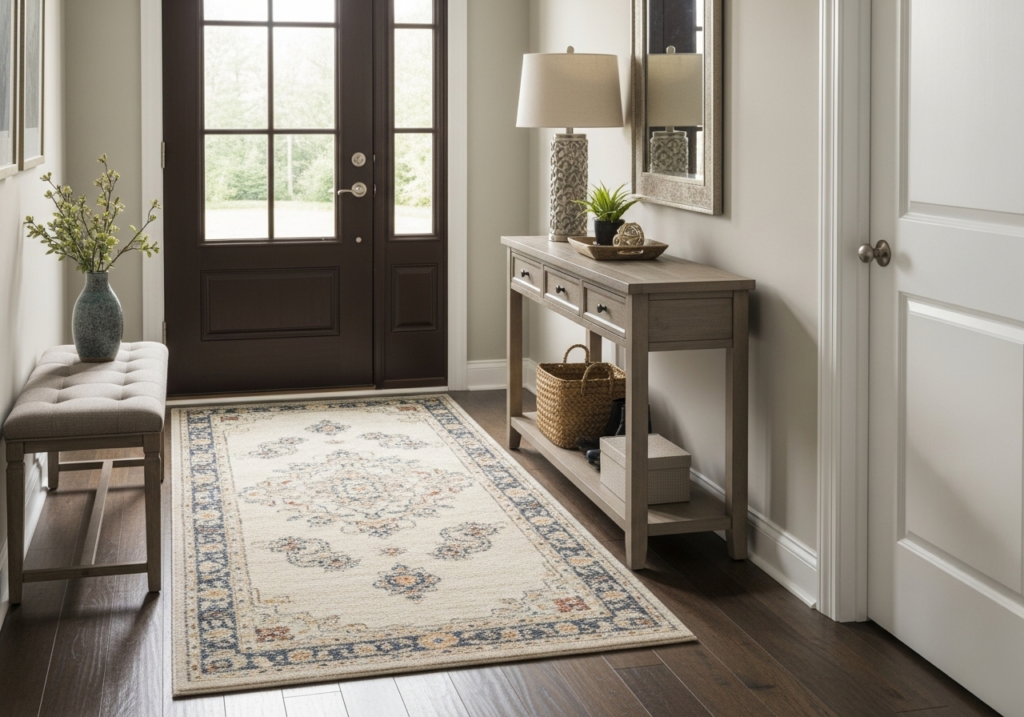
The entryway is the first little glimpse into your home… and rugs can make it feel instantly more inviting.
Here, placement is more about alignment than size.
A runner placed neatly along the walkway works beautifully—it naturally guides movement and makes the space feel organized.
If you have a console table, placing a rug underneath it helps anchor that entire setup. It creates a small, styled moment instead of things just floating separately.
One small but important detail—make sure your rug doesn’t block the door.
It sounds obvious, but it’s something we often overlook.
Dining Area: It’s All About Proportion
Dining spaces have one very simple rule…
but it makes all the difference.
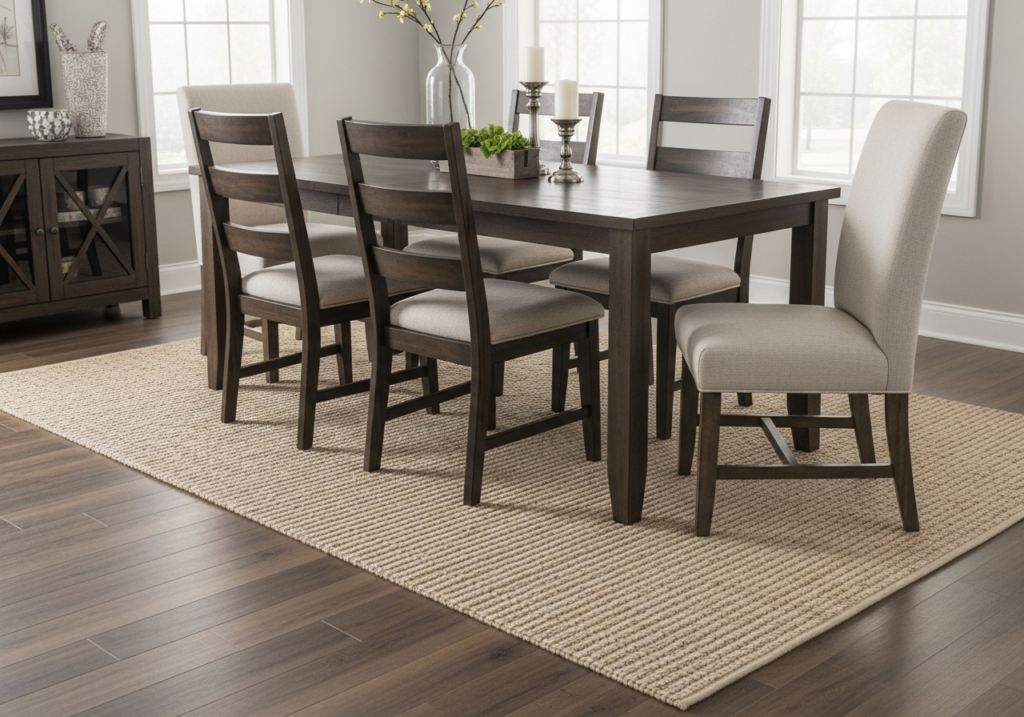
Your rug should be large enough so that chairs stay comfortably on it—even when pulled out.
If the rug is too small, chair legs catch on the edges, and the whole setup feels awkward and impractical.
A slightly larger rug instantly makes the dining area feel more polished and easier to use.
Flatweave or low-pile rugs work best here—they’re easier to clean and sit better under furniture.
Small Corners: The Quiet Transformation
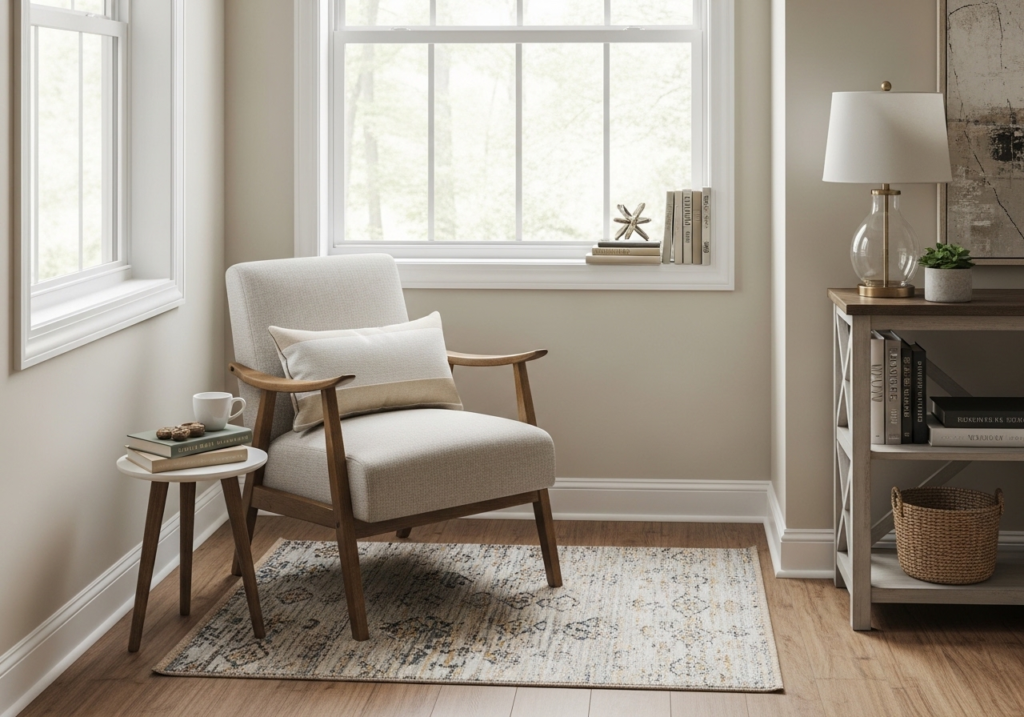
Some of the most beautiful spaces in a home are the smallest ones.
A simple chair near a window…
a quiet reading corner…
a little spot that’s just yours.
Adding a rug here does something subtle but powerful—it defines the space.
Even a small rug under an accent chair can turn a random corner into something intentional and cozy. It visually tells you, this is a space within a space
A Few Things That Make a Big Difference
Before you go, here are a few small things that can completely change how your rug looks:
⦁ If a rug feels off, it’s often because it’s too small
⦁ Furniture should feel connected, not floating
⦁ Leave a little breathing space around the edges
⦁ Don’t overthink symmetry—slightly relaxed placements feel more natural